Pitch To Investors / Partners
Investment Ready:
Backed by a newly completed Definitive Study reviewed by industry piers, featuring a highly accurate +/- 20% CAPEX and an OPEX optimized for mechanized operations in Australia, the APOD Palm and Bamboo LCLF (Low Carbon Liquid Fuels) project represents a fully de-risked, institutional-grade opportunity positioned at the vanguard of the global energy transition.
By combining high-yielding, certified palm assets with rapid-growth, carbon-negative bamboo plantations, the project secures a resilient, multi-feedstock supply chain engineered to withstand agricultural and market volatility. We bridge the gap between upstream biomass cultivation and downstream industrial refining by establishing a transparent financial model optimized for immediate capital deployment.
With a strict commitment to securing international sustainability credentials, including RSPO and ISCC certifications, the APOD project guarantees compliance with the stringent regulatory frameworks of high-premium European Union and United Kingdom markets. Backed by process partnerships, developed structured land-use policies, and a phased execution strategy, this project offers investors a bankable blueprint for scalable Biodiesel (B100), Renewable Diesel, and Sustainable Aviation Fuel (SAF) production designed for medium to long-term, low-risk profitability.
The Opportunity:
Australia currently imports over 90% of its liquid fuels, leaving our most critical industries such as Defence, Mining, and Transport, all highly vulnerable to global supply shocks. CDD Australia is answering this national challenge by establishing the country’s first end-to-end, vertically integrated Low Carbon Liquid Fuel (LCLF) supply chain, situated entirely within the strategic northern Australian tropics..
The Problem: The "Hard-to-Abate" Gap:
While passenger vehicles transition toward electrification, the heavy industries driving Australia's GDP cannot easily electrify. Mining fleets, Defence vessels, and long-haul transport demand high-density liquid energy. To meet Australia's stringent decarbonisation targets, these sectors urgently require a scalable, drop-in replacement for conventional diesel.
The Solution: The CDD Circular Model
We don’t just refine fuel; we build resilient agricultural ecosystems. By utilizing a closed-loop system, we convert certified tropical feedstocks into high-value energy and agricultural assets:
-
100% Australian-Grown: Certified plantations in Northern Australia provide total sovereign feedstock security.
-
Immediate B100 Deployment: High-performance, fully traceable Biodiesel (B100) that requires zero engine modifications.
-
Sovereign Renewable Diesel (RD): De-risking heavy industry and defence with 100% home-grown, certified renewable diesel.
-
Sustainable Aviation Fuel (SAF): Building a secure, certified domestic foundation for the nation's aviation future.
-
Biochar Carbon Capture: Our refining process converts agricultural byproducts into Biochar, creating a secondary revenue stream while restoring soil health—the definition of a true circular economy.
Strategic Market Alignment (Why Now?)
1. Defence Readiness
The Australian Defence Force is actively transitioning to renewable diesel blends. CDD Australia is uniquely positioned to become a primary domestic supplier, ensuring sovereign energy resilience.
2. Policy Tailwinds
The launch of the Cleaner Fuels Program offers massive production-linked incentives tailored for projects at our exact stage of development.
3. Absolute ESG Integrity
With the expansion of the Guarantee of Origin (GO) Scheme, our "fully traceable" feedstock model offers institutional investors the highest verified level of carbon integrity.
For Strategic Partners (Mining & Logistics)
Partnering with CDD Australia allows major industrial players to de-risk their decarbonisation journey through clear financial and operational advantages:
Operational Resilience & Compliance
-
Lock in Supply: Secure long-term offtake agreements for domestic B100 and Renewable Diesel.
-
Safeguard Mechanism Targets: Seamlessly lower your facility’s baseline emissions with low-carbon intensity fuels.
-
Sovereign Security: Eliminate exposure to volatile global oil markets and vulnerable international shipping lanes.
Co-Development & Technical Collaboration
-
Tech Collaboration: Partner with cutting-edge LCLF refining technology designed to boost efficiency and lower production costs.
-
Risk-Sharing Model: Share risks and benefits in a partnership framework tailored for mutual success in a projected $100 billion Southeast Asian industry.
Global Market Expansion
-
Premium Market Access: Leverage our strict adherence to international sustainability standards (including RSPO and ISCC protocols) to tap into high-growth, supply-deficient, sustainable global markets.
-
Shared Values: Align your brand with an organization explicitly committed to zero-deforestation, social responsibility, and deep community engagement.
What We Bring
-
Unrivalled Expertise: Decades of senior-level experience in sustainable agricultural oil production and petrochemical refining.
-
Sovereign Infrastructure: Establishing the first certified, sustainable plantations and hybrid refinery complex in the Northern Tropics.
-
Transparency & Impact: A fully auditable supply chain that creates regional jobs, boosts local economies, and promotes verified eco-friendly practices.
Project Brief
Stage and Phased Development & Technical Blueprint
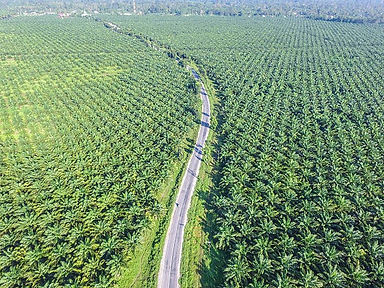
Phase 1: Cultivation, Infrastructure & Sovereign Power Located within a strategic 20,000+ Ha tropical site, the project launches with Early-stage infrastructure features a 15–20 Ha nursery designed to scale two 10,000+ Ha plantation block, a staged build of certified plantations and a downstream LCLF refining facility.
Resource efficiency is built into the landscape: Rainwater harvesting reservoirs will be sheltered by evaporation-reducing Solar PV panels. Paired with a robust BESS infrastructure, this 100MW green energy system powers our specialized electric harvesting equipment and EV fleet while establishing a highly lucrative grid-feed revenue stream. Furthermore, initial land clearing waste will be immediately redirected into an on-site Biochar system to eliminate emissions from land preparation.
Stage 1: Refining Output & Feedstock Architecture
-
Primary Crop Yield: >500,000 tonnes of certified tropical feedstock.
-
Refinery Throughput: >150,000 tonnes processed in Phase 1.
-
Liquid Fuel Output: >160 million liters of high-performance LCLF / B100.
-
Feedstock Optimization: Primary plantation oils will be blended with regional aggregations of Used Cooking Oil (UCO) and Tallow to maximize production efficiency.
Zero-Waste Refining Ecosystem Engineered as a true closed-loop facility, the refinery reuses 100% of its waste derivatives. The process generates multiple high-value commodities: Green Power, Biochar Organic Fertilizers, Bio-Oils, Bio-Syngas, Cattle Feed, and Cosmetic Oils. Water consumption is strictly minimized, with all processing water continually recycled through a state-of-the-art thickener and clarification system.
ESG Commitments
Our ESG Framework: Moving from 3P to 5P
At CDD Australia, Environmental, Social, and Governance (ESG) principles aren't just policies—they are the foundation of our operational identity. While our business was built on the traditional 3P guide (Planet, People, Profit), we are evolving our model to embrace the globally recognized 5P approach: Planet, People, Prosperity, Peace, and Partnership. This transition allows us to unlock high-value sustainable finance and deliver measurable, long-term environmental outcomes.
De-Risking Through Rigorous Standards We embed comprehensive ESG impact and risk assessments into every stage of our project lifecycles. This proactive framework protects our investors and optimizes operational efficiency by ensuring our infrastructure projects are both financially robust and socially aware. Our governance guidelines match the rigorous criteria of leading multilateral development finance institutions, guaranteeing full compliance with national regulations and strict adherence to international best practices.